Yarrow: Medicine Shared Between People and Plants
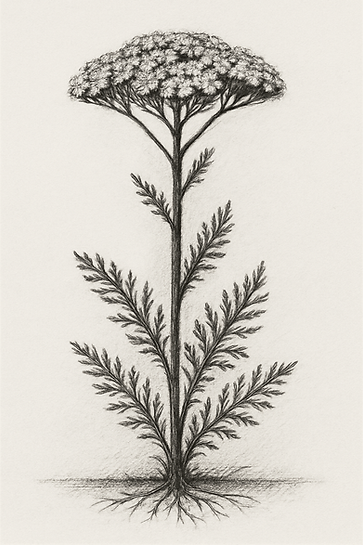

Yarrow carries the memory of healing. For as long as people have known it, it has been gathered to stanch bleeding, soothe fevers, and ease pain. Its leaves and flowers are filled with essential oils, flavonoids, and phenolic compounds that calm inflammation and resist infection. What yarrow has always done for people, it now does for the soil when it enters the loop. Its chemistry is not simple nutrition but a language of immunity, a signal microbes can read and remember.
---------
When worms pull its fine leaves into the bedding, microbes rush to decode the aromatics—chamazulene, cineole, borneol, and the other compounds that make yarrow both fragrant and medicinal. These molecules do not vanish; they stir microbial communication, shifting quorum sensing, nudging defense pathways, and shaping how communities of bacteria and fungi cooperate. In this way the soil begins to learn the motifs of healing. What people once trusted on wounds, the soil inherits as a pattern of recovery.
---------
Yarrow is not fragile. Science has shown it persists across decades, adapting to drought, cold, or poor soils by changing its chemistry. In Arizona’s heat and dryness, yarrow produces even stronger signals—more essential oils, more antioxidants, more of the volatile defenses that microbes can interpret. Each season it adjusts, and each time it is returned to the bin, it offers the soil a slightly different lesson. The loop does not only remember resilience—it remembers adaptability.
---------
In the garden, the presence of yarrow is subtle but vital. Its tissues release minerals and nitrogen, but more importantly, they carry motifs of balance. Nettle stings and teaches toughness; comfrey knits fertility together; cannabis trains the soil in its own language. Yarrow heals. It ensures that the soil remembers not only how to resist stress but how to recover from it. What begins as a feathery plant at the edge of the field becomes, in the loop, the quiet voice of restoration.